
Why Water Pools on Your Driveway (and How to Fix It)
A puddle on the driveway after a storm might not seem like a big deal. But water that sits on asphalt is water with time to get into it. In the Eastern Panhandle, where winter brings plenty of freezing and thawing, standing water is one of the fastest ways to shorten the life of a driveway. Here is why it happens and what can be done about it.
Why standing water is hard on asphalt
Asphalt itself holds up well to rain that runs off. The trouble starts when water sits. It soaks into small cracks, works down into the stone base, and softens the soil underneath. When it freezes, it expands and pushes the pavement apart. Puddles also turn into ice patches on winter mornings, which is a safety problem on any drive, and a bigger one on a slope.
Common causes of pooling
Low spots from a settling base. Many driveways around Berkeley, Jefferson, and Morgan counties sit on clay soil that holds water. If the stone base was thin or the soil underneath was not compacted well, sections of the driveway can sink over time. Those dips catch water every time it rains, and the extra water makes them sink more.
Not enough slope. A driveway needs to be built so water has somewhere to go, either with a crown down the middle or a steady cross slope to one side. A driveway paved dead flat will hold water across the whole surface. This is common on flatter lots around Charles Town and Shepherdstown, where the fall of the ground is easy to miss.
Edges that trap water. Over the years, grass, soil, and mulch can build up along the sides of a driveway until they sit higher than the pavement. Water that should run off the edge gets dammed in instead.
Downspouts and runoff. A downspout that empties onto the driveway, or a yard that slopes toward it, can send far more water across the pavement than rain alone.
Blocked ditches and pipes. On rural lanes, the ditch or pipe under the driveway near the road can fill with leaves and silt. When it backs up, water spreads across the drive instead of passing under it.
Ruts from heavy vehicles. Delivery trucks, trailers, and equipment parked in the same place can press grooves into the surface that fill with water.
What you can check yourself
Some fixes are simple. Trim back grass and dig out soil or mulch that has built up along the edges so water can run off. Point downspouts away from the driveway or add an extension. Clear leaves and debris out of the ditch or pipe at the road, especially after fall leaf drop. Then watch the next good rain and see where water collects and how long it stays.
How a contractor fixes it
If the water is caused by the shape of the pavement or a weak base, the repair has to change the shape or fix the base. Sealcoat will not do it, since sealer follows the surface it is put on. Depending on what we find, the fix can be:
Patching a low area. The sunken section is cut out, the base underneath is repaired and compacted, and new asphalt is put back level with the surface around it.
An overlay. When the base is still solid, a new layer of asphalt over the old one can be shaped to give the driveway the slope it was missing.
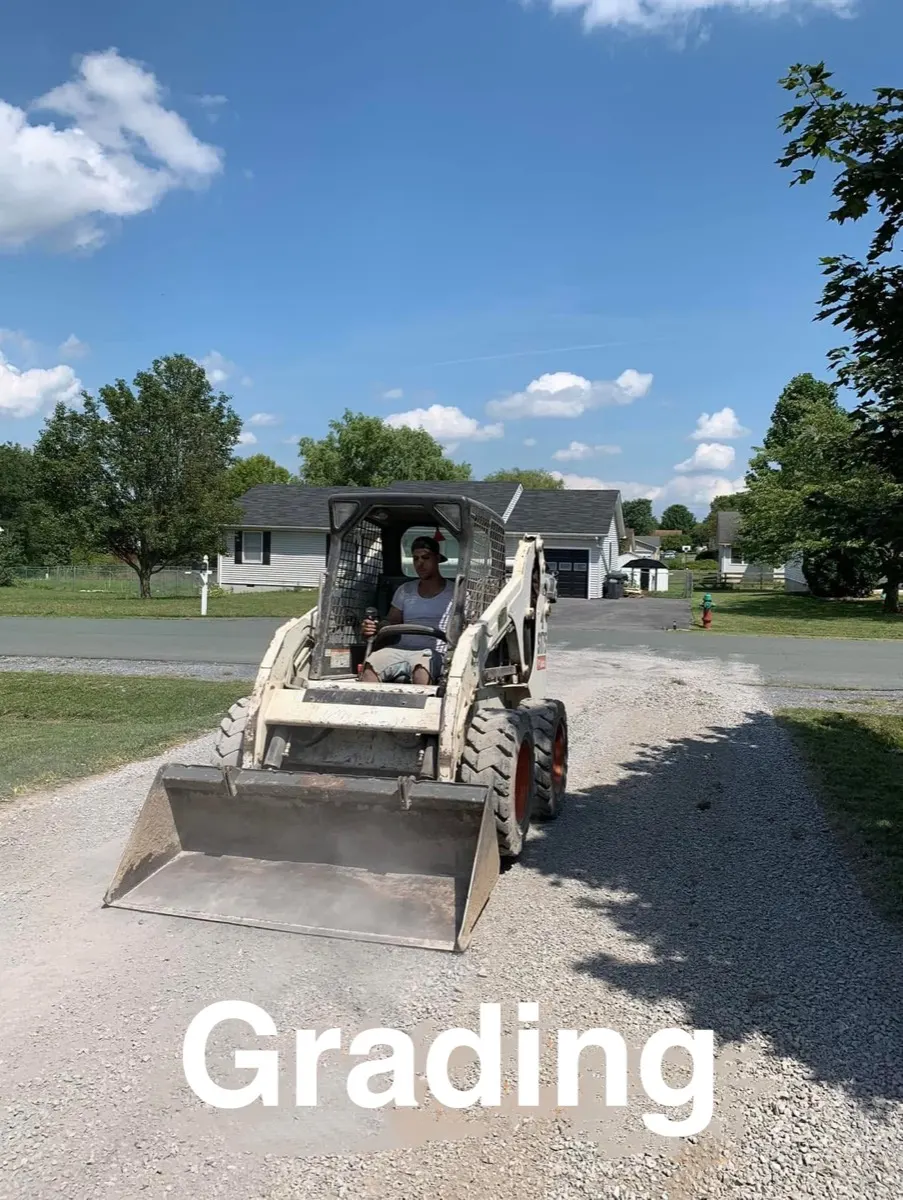
Regrading and rebuilding. When the whole drive was built flat or the base has failed, the right fix is to tear out, grade the ground so water leaves, build a compacted stone base, and pave again. Sometimes that includes a shallow swale or ditch along the edge to carry water away.
Grading is part of our driveway paving work, not an extra. If your driveway also needs sealcoating, the drainage problem should be fixed first, or the low spots will show back up as soon as the coat wears. You can see how we handle drainage on flatter ground in Shepherdstown and Charles Town.
Get it looked at before winter
Pooling tends to get worse, not better, and freeze-thaw speeds that up. If water is sitting on your driveway after every rain, call us at (304) 579-3872. We will look at the slope, the edges, and the base, explain what is causing it, and tell you what it will take to fix. If you want a sense of what paving work involves, our paving cost guide walks through what goes into the price. Call for a free estimate.